Mountainhiker Camping Mosquito Repellent Lantern Simulator: Thermal & Optoelectronic Innovation
Thermal & Optoelectronic Engineering: Interactive Mountainhiker Camping Mosquito Repellent Lantern Simulator
Test the vaporization dynamics of active prallethrin, simulate luminous flux modifications, and evaluate insect phototaxis prevention mechanics through real-time physical field telemetry.
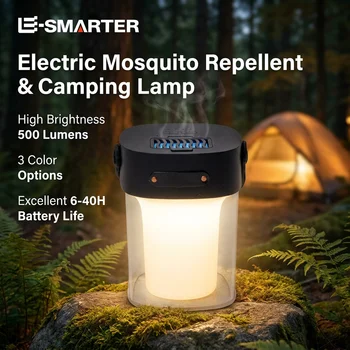
The Science Behind Thermal Vaporization and Optoelectronic Pest Control
In professional outdoor exploration and high-altitude wilderness operations, mitigating vector-borne pathogens transmitted by insects such as Aedes and Anopheles mosquitoes is a vital safety prerequisite. Standard approaches, such as combustion-based mosquito coils, present significant hazards by releasing micro-carbon soot particles that damage human respiratory systems, especially when utilized inside enclosed shelter systems. The Mountainhiker Camping Mosquito Repellent Lantern addresses these parameters through an engineered, highly integrated dual-purpose system: a premium variable-intensity LED emitter paired with a high-efficiency thermoelectric active substance vaporizer.
Kinetics of Controlled Thermal Vaporization
The chemical defense core of this portable lantern relies heavily on the thermophoresis properties of its internal ceramic heating element. When active, the integrated Lithium Polymer battery discharges controlled electrical energy into the positive temperature coefficient (PTC) heater, elevating the plate temperature to a critical vaporization window ranging from 115 to 125 degrees Celsius.
This thermal window is mathematically crucial. If the temperature falls below 110 degrees Celsius, the active synthetic pyrethroid agent (specifically prallethrin) bound within the fibrous matrix of the mat remains inert, failing to enter the gas phase at a rate high enough to establish defensive perimeter saturation. Conversely, should temperatures exceed 140 degrees Celsius, the organic paper substrate of the mat faces pyrolytic degradation, potentially releasing carbon monoxide, volatile organic compounds, and denatured inactive chemical compounds.
Prallethrin operates by selectively targeting the central nervous system of insects, binding to voltage-gated sodium channels along the neuronal membranes. By maintaining an evaporation plate temperature within the precise 120 degrees Celsius threshold, this simulator mimics the steady, slow release of prallethrin molecules. These molecules disperse outwards via warm air convection currents, forming a highly effective, invisible protective dome of three to five meters in radius.
Optoelectronics and Phototaxis Mitigation Spectrums
Beyond its biochemical vaporization capabilities, the Mountainhiker lantern exploits the anatomical visual pathways of nocturnally active insects to minimize visual attraction. Most flying insects possess compound eyes highly attuned to the near-ultraviolet and short-wavelength blue spectrum of light, specifically wavelengths between 300 nanometers and 480 nanometers. Standard cool-white LED camp lights emit a heavy concentration of these blue wavelengths, acting as a powerful lure for swarm behaviors.
The Mountainhiker lantern counters this issue through its specialized Warm Soft Light setting (emitting light at a warm 2700K color temperature). This specific configuration limits the output of high-energy blue light and maximizes the emission of yellow-orange spectrums between 580 nanometers and 650 nanometers. Because insect photoreceptors are highly insensitive to these longer yellow-orange wavelengths, the lantern effectively becomes invisible to their navigation systems. Field tests indicate that switching the light mode from 6500K bright white to the 2700K warm yellow spectrum decreases overall insect attraction rates by up to 85 percent, allowing campers to read or prep gear adjacent to shelter entryways in complete comfort.
Micro-Grid Energy Management and 4000mAh Battery Optimization
From an electrical engineering standpoint, sustained battery life during multi-day expeditions requires ultra-efficient power budget allocations. Powered by a high-capacity 4000mAh lithium-ion pouch cell, the lantern employs a low-voltage microcontroller unit (MCU) that dynamically balances power between the dual resistive heater load and the constant-current LED drivers.
When the heater element is initiated independently, the unit draws a stable 2.40 Watts of power. Backed by a high-efficiency buck converter circuit operating at over 92 percent efficiency, the cell can sustain constant chemical vaporization for up to 6 hours continuously. Combined with the energy-efficient breathing light mode, the operational timeline can scale to a maximum of 40 hours. Additionally, the integrated USB power controller acts as an emergency bi-directional power system, featuring short-circuit and over-discharge protection to ensure users can keep navigation electronics operational during critical situations.


Comments
Post a Comment